Prayer · 2 min read
The Lord’s Prayer in the Heidelberg Catechism
The Heidelberg Catechism ends by teaching prayer. Lord’s Days 45–52 explain why Christians pray, how they approach God, and what they ask in the Lord’s Prayer.
Published
Prayer belongs to thankfulness
Question 116 places prayer within gratitude. Prayer is more than a final task after the doctrinal teaching is finished. It expresses the dependence that runs through the catechism from its opening answer.
Question 117 describes prayer from the heart to the true God revealed in His Word, honest recognition of need, and confidence that He hears because of Christ. The catechism joins humility with assurance rather than making them competing attitudes.
Confidence in Christ gives people who know their need a reason to pray. They approach God because He has promised to hear them, and ask for the grace and help they cannot supply for themselves.
Our Father in heaven
In Questions 120–121, the opening words teach childlike reverence and trust. Through Christ, God is the believer’s Father. “In heaven” directs the reader away from a merely earthly conception of His majesty.
The prayer is also plural: our, us and we. Even in private prayer, its words make room for the needs of others alongside our own.
- God’s name
Question 122 asks that we know God and honour Him in all we do.
- God’s kingdom
Question 123 asks for His rule in our lives, the preservation of His church and the fullness of His kingdom.
- God’s will
Question 124 asks for willing obedience to God in our daily responsibilities.
- Our daily bread
Question 125 asks for physical provision and trust in the Father’s blessing.
- Forgiveness
Question 126 asks for mercy through Christ and a readiness to forgive others.
- Deliverance
Question 127 asks for the Spirit’s strength to resist temptation and persevere.
Daily needs are not too ordinary
Question 125 explains daily bread in terms of physical needs and dependence on God’s blessing. Work and provision remain part of ordinary life, but the prayer refuses to treat them as self-sufficient sources of security.
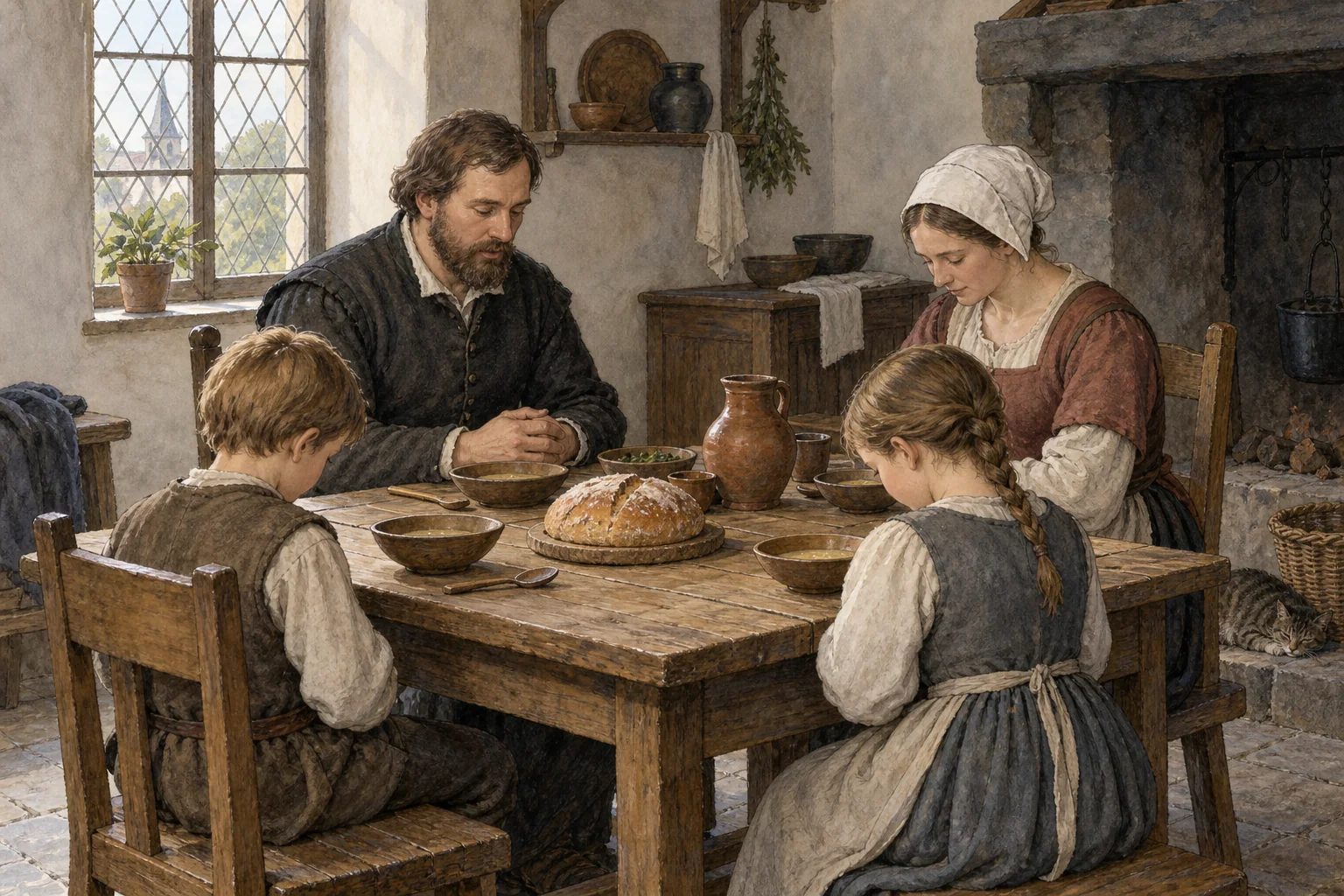
The request asks for what we need while teaching us to recognise God as the giver. In daily prayer, you might name a particular need and give thanks for the people, work and resources through which He provides.
Forgiveness and strength belong together
Question 126 grounds forgiveness in Christ’s blood. It connects the forgiven person’s willingness to forgive neighbours with evidence of grace at work, rather than making that willingness a payment that purchases mercy.
Question 127 acknowledges weakness in the struggle against the devil, the world and the flesh. Asking for the Spirit’s strength puts into practice the dependence on God expressed in the catechism’s opening answer.
The final questions return to God’s power and the certainty of His hearing. Question 129 explains Amen as confident affirmation. The prayer ends with trust in God rather than an assessment of how eloquently the petitioner has spoken.
Read the full Lord’s Prayer in Question 119 before using the explanatory questions. Then take one petition at a time, retaining the whole prayer’s movement from God’s glory to our need.
Sources and further reading
These guides explain the text from a Reformed perspective. They are original editorial commentary, separate from the historic confession and its published translation.
- Lord’s Days 45–52: PrayerFollow the next-day links for the complete exposition.
- Question 119: The Lord’s PrayerThe complete prayer in the site’s source edition.
- CRCA-published Heidelberg Catechism (PDF)The source edition for this site’s questions, answers, Scripture references, and edition notes.